
In my book New Evidence for Two Human Origins: Discoveries That Reconcile the Bible and Science1 I followed the view of those who place the Garden of Eden in the lower part of Mesopotamia (present day Iraq). I took the view defended by some people that the Garden of Eden was located at Eridu which was situated near the mouth of the Euphrates River. Since I wrote my book, I have recently read David M. Rohl's book Legend: The Genesis Of Civilisation2. Also I have observed more thoroughly the Bible's description of the river that went through Eden and became four heads.
The Bible says, "And a river went out of Eden to water the garden, and from there it was divided and became four heads" (Gen. 1:10).3 This verse indicates that the Garden of Eden was located near the heads of these two known rivers, not at their mouths where they go into the Persian Gulf. Having discovered Rohl's arguments, I have changed my mind as to the location of the Garden of Eden. I do not agree with all of Rohl's statements and conclusions, of course, since he does not believe in the inspiration of the Holy Scriptures as I do. Rohl has convinced me that Eden was in northern Iran
between Lake Urmia and the Caspian Sea. The Garden of Eden was just east of Lake Urmia.
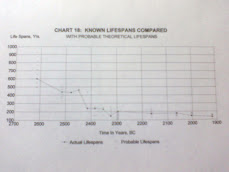
According to my thesis, God created the human race as recorded in Genesis 1; much later He created Adam and Eve directly from the ground as it was told in Genesis 2. The descendants of Adam and Eve married into this pre-Adamic human race. My evidence for this is that Genesis 2:5 moves the narrative along in time to a different creation of man from the Genesis 1 narrative. Also in my book, I show that the lifespans recorded in Genesis 11 decrease just as you would expect them to do if you accept this dual-origins scenario. This flourish of intermarriages did not occur until the sons of God intermarried with the daughters of men. The Bible seems to indicate that the sons of God were fallen angels; also ancient writings also agree with this interpretation of Scripture. (See my article "Are the Sons of God Fallen Angels.") The subject of this section of Genesis is the race of the descendants of Adam and Eve so "the daughters of men" are descends of Adam and Eve. Ken Johnson gives the date for the descent of the evil angels to be 460-622 years after the creation of Adam and Eve. Coupling this with the statement that God made concerning the decrease in lifespans: "My Spirit shall not strive with man [lit., the man] forever, because he also is flesh; nevertheless [or therefore] his days shall be one hundred and twenty years" (Gen.6:3, NASB). Therefore 460-622 years after the creation of Adam and Eve must have been the time when the descendants of Adam and Eve began also to intermarry with the pre-Adamites. I have connected these two events because it was the intermarrying between the descendants of Adam and Eve and the pre-Adamites that lowered the lifespans of the descendants of Adam and Eve. Since during these 460 years between the creation of Adam and Eve, their descendants were living up in the mountains away from the regions that probably were more populated, that is, regions such as, southern and central Iraq. Dwelling in Eden may have isolated them.
Here are some reasons why I believe that Rohl is correct in placing the Garden of Eden along the Meidan River (also called the Adji Chay). The Bible tells us that this river which went through the Garden of Eden became the heads of four rivers. Then it lists the rivers; two of these rivers are easily identified. They are the Tigris River and the Euphrates River. The other two rivers are more difficult to identify. But since we know that the river of Eden was located at the heads of the Tigris and the Euphrates Rivers, we now know the general location where we should search for the Garden of Eden. Eden was the general area in which the Garden of Eden was located; it was "in Eden, to the east (Gen. 2:8). The text is saying that it was at the east part of Eden. According to Rohl, Eden was the territory around Lake Van and Lake Urmia. With respect to the four rivers that are mentioned that possess these four heads, the first river is the Pishon, which "flows around the whole land of Havilah, where there is gold" (Gen.2:11, NASB). Unfortunately, this Pishon is not easily identified; Rohl identifies the other three rivers which are to the north, west, and south of Lake Urmia and the River Adji Chay and then observes that the Pishon completes the circle of the heads of rivers. Rohl explains that Reginald Arthur Walker4 has found that the Pishon River is the Uizhun River, also called the Kezel Uzun.5 The meaning Kezel Uzun is interesting since it means "long gold,"6 and the Bible says that gold was in Havilah where the Pishon was located (Gen:2:11). Rohl convincingly shows how the word Pishon is linguistically and phonetically related to Uizhun; it does appear that Pishon came to be pronounced Uizhum.
Next, the Bible speaks of the Gihon which goes through the land of Cush. Walker identified the Gihon with present-day Araxes which is more recently called the Araks or Aras. It can be shown that this river, which goes north and to the east of the Adji Chay was called the Gaihun as recently as the eighth century.7
The third river was the Hiddekel, and it is well extablished that it referred to the Tigris River.
The fourth, the Perath, is what we know as the Greek name Euphrates, the great river that lies east of the Tigris River, flowing from north-west to south-east into the Persian Gulf.
As was noted, the Bible says, "And a river went out of Eden to water the garden, and from there it was divided and became four heads" (Gen. 2:10).
Rohl gives us another reason for placing the likely location of the Garden of Eden east of Lake Urmia: there is evidence that the Land of Nod was located to the north west of this spot. This supports our notion concerning location of the Garden of Eden since the Bible relates that, "Cain went out from the presence of Jehovah. And he lived in the land of Nod, east of Eden" (Gen. 4:16). Rohl found that a number of towns east of the proposed location of the Garden of Eden are in existence today. They are named Noqdi. The i at the end of the word denotes dwelling place.8 As Iraqi means one who dwells in Iraq, Noqdi means one who dwells in Noqd. Of course this is very close to the sound of the word Nod. The province of Ardabil lies east of the Garden of Eden. Rohl traveled to the town of Ardabil to visit the maping department. He related his discovery:
To the north of Ardabil were several villages called Noqdi which might plausibly be linked to the biblical Nod. Moreover, the whole region to the north of Ardabil turned out to be known as Upper and Lower Noqdi. This was an unexpected revelation, as the names of these two districts did not appear on any map I had seen. 9The modern city of Tabriz lies on the Meidan Chai (Adji Chay); the Ahar (not Adji) Chay lies north of the Meidan Chai. Rohl wrote, "The modern Iranian name of the 4,000-metre mountain ridge which separates the valley of Tabriz from Ahar is Kusheh Dagh--the 'Mountain of Kush.'"10.
The Bible says that before God created Adam a flow came out of the ground to water the whole land. (Gen. 2:5-6) It had not rained on the land. Many translations call this flow a "mist," but this is probably an incorrect translation. See my book for why we can be sure that "mist" is an improper translation. The New American Standard Bible gives "flow" as an alternate rendering. Genesis 2:10 tells us that "a river went out of Eden to water the garden." So the river must have been fed by this "flow" that came out of the ground "to water the garden." The fact is that this mountainous area east and southeast of Lake Urmia contains hot springs that flow out water from the earth. An example is the Takht-e Suleiman, which is still flowing today. Two streams flow down from it and combine to form the Zarrineh Rud, which flows down to Lake Urmia. These are also called abzu's since they were thought by people in ancient times to be outcroppings from the underground water called the Abyss. Rohl relates that "...there are numerous thermal springs around Tabriz which join the Adji Chay.... This is what gives the water its brackish taste." 11
Since there are so many reasons why we should conclude that the Garden of Eden was located just east of Lake Urmia, it was necessary for me to change my mind on this subject. I appreciate Reginald Walker's and David Rohl's contributions to our understanding of the whereabouts of the Garden of Eden.
This following may be of interest. This Genesis passage has been a problem for some people; one website even uses this text to argue that the Bible cannot be trusted. The author of this website has a problem with the text because it tells us that this river went out (some translations say "flowed out") of Eden, separated, and became four heads. They say that in this region of the world there has never been a case where a river flowed into four heads, two of which were the Tigris and the Euphrates. I would add that such a scenario probably never happened anywhere because heads of rivers are situated in high elevation and mouths of rivers in low elevations. I show in another article that what the Bible means in this text is that the river lay in a line which "went out" of Eden, but the direction of the flow of water was opposite to this. The river flowed into Lake Urmia, which was in Eden.
________________
1Gary T. Mayer’s book New Evidence for Two Human Origins: Discoveries That Reconcile the Bible and Science (Bloomington, IN, Milton Keynes, UK: AuthorHouseTM, 2009), 172-73.
2David M. Rohl, Legend: The Genesis Of Civilization, "Test of Time" series, vol. 2 (London: Century Random House, 1988).
3Unless otherwise noted scripture quotations are from The Literal Translation of the Holy Bible, copyright © 1976, 1978, 1980, 1981, 1984, 1985 by P. Green, Sr. which was contained in the side column of Green’s work The Interlinear Bible: Hebrew-Greek-English, © 1976, 1978, 1980, 1981, 1984, 2nd ed. 1986 by Jay P. Green, Sr. (Lafayett, IN: Sovereign Grace Publishers).
4Rohl received considerable help from a 27-page paper "The Land of Eden by R. A. Walker," which had been advertised by Walker in Still Trowelling, the Newsletter of the Ancient and Medieval History Book Club (No. 11, 1986) in the UK.
5Rohl, Legend, 53.
6Ibid.
7Ibid., 52.
8Ibid., 63.
9Ibid., 110.
10Ibid., 56.
11Rohl, Legend, 107



 Posts
Posts


I think it was the Caspian sea because the Bible says it was impossible to go back to it afterwards.
ReplyDeleteThank you for your comment. They are always appreciated by me. Gary
Delete